Enkele linosnedes met als thema Rosmalen


Over dementie


De bijbel van de kerk


De ros die de molensteen trok. Maar de Molen vlakbij de helaas vroeg overleden Albert West (zanger) is een icoon. Daar vond ik als kleuter ooit een munt van Koning Willem.


Enkele linosnedes met als thema Rosmalen
Over dementie
De bijbel van de kerk
De ros die de molensteen trok. Maar de Molen vlakbij de helaas vroeg overleden Albert West (zanger) is een icoon. Daar vond ik als kleuter ooit een munt van Koning Willem.
Gouache of Billy Holliday from the 50ies/
Billie Holliday , Portret in Gouache van Billie Holiday in het jazztijdschrift Down Beat, ca. februari 1947!; op de bank van studio Jan Vis ! Het geschilderde optreden is van de hand van onze kunstenaar Louis Nagelkerke hij zag ook meteen dat het Billy was! Ook vond ik de foto van dit portret nog in kleur . De gouache bevindt zich nu in mijn Jazz and Blues musiccollection! M

PS/ Click on any photograph and scroll along in the original size!
Eleanora Fagan (April 7, 1915 – July 17, 1959), professionally known as Billie Holiday, was an American jazz and swing music singer with a career spanning 26 years. Nicknamed "Lady Day" by her friend and music partner Lester Young, Holiday had an innovative influence on jazz music and pop singing. Her vocal style, strongly inspired by jazz instrumentalists, pioneered a new way of manipulating phrasing and tempo. She was known for her vocal delivery and improvisational skills.[1]
After a turbulent childhood, Holiday began singing in nightclubs in Harlem, where she was heard by producer John Hammond, who commended her voice. She signed a recording contract with Brunswick in 1935. Collaborations with Teddy Wilson yielded the hit "What a Little Moonlight Can Do", which became a jazz standard. Throughout the 1930s and 1940s, Holiday had mainstream success on labels such as Columbia and Decca. By the late 1940s, however, she was beset with legal troubles and drug abuse. After a short prison sentence, she performed at a sold-out concert at Carnegie Hall, but her reputation deteriorated because of her drug and alcohol problems.

She was a successful concert performer throughout the 1950s with two further sold-out shows at Carnegie Hall. Because of personal struggles and an altered voice, her final recordings were met with mixed reaction but were mild commercial successes. Her final album, Lady in Satin, was released in 1958. Holiday died of cirrhosis on July 17, 1959. She won four Grammy Awards, all of them posthumously, for Best Historical Album. She was inducted into the Grammy Hall of Fame in 1973. Lady Sings the Blues, a film about her life, starring Diana Ross, was released in 1972. She is the primary character in the play (later made into a film) Lady Day at Emerson's Bar and Grill; the role was originated by Reenie Upchurch in 1986 and was played by Audra McDonald on Broadway and in the film. In 2017 Holiday was inducted into the National Rhythm & Blues Hall of Fame.
https://www.youtube.com/watch?v=H3sLwmQZhkY
Classic Mood Experience The best masterpieces ever recorded in the music history. Join our Youtube: https://goo.gl/8AOGaN 00:00 Riffin' The Scotch (1934) 02:29 Twenty Four Hours A Day (1935) 05:28 If You Were Mine (1935) 08:36 You Let Me Down (1935) 11:26 These Foolish Things (Remind Me Of You) (1936) 14:42 No Regrets (1936) 17:17 Summertime (1936) 20:09 A Fine Romance (1936) 23:00 The Way You Look Tonight (1936) 25:58 Who Loves You (1936) 29:10 That’s Life I Guess (1936) 32:17 I Can't Give You Anything but Love (1936) 35:42 Pennies from Heaven (1936) 38:56 I've Got My Love To Keep Me Warm (1937) 41:48 Carelessly (1937) 44:54 How Could You? (1937) 47:21 Moanin' Low (1937) 50:22 Mean To Me (1937) 53:27 Easy Living (1937) 56:25 Yours and Mine (1937) 59:38 Me, Myself And I (1937) 01:02:12 A Sailboat in the Moonlight (1937) 01:04:59 Getting Some Fun Out Of Life (1937) 01:07:58 Trav'lin' All Alone (1937) 01:10:09 My Man (feat. Billie Holiday) (1937) 01:13:06 You Go to My Head (1938) 01:15:57 Strange Fruit (1939) 01:19:02 God Bless The Child (1941)

Jazz-magazine Down Beat, ca. februari 1947!

Jan Vis is very proud of the large amount of artists that we have been able to offer for many years. A wide range of bands, acts, DJs and artists in all kinds of genres can be booked through us for your event. Please don’t hesitate to contact us for more information. My dad used to run with Albert West a local hero singer, one of the stars contracted as almost from the start of their business. Together with Willy Winkels, Boy Robeerst they sponsored the Local Footballclub FC-Den-Bosch.
I got junior Vis his permission to place Billy on their starcouch!

Seeing her actually sing/

https://www.youtube.com/watch?v=-DGY9HvChXk
Reelin’ In The Years Productions has available for licensing over 20,000 hours of music footage spanning 90 years. Additionally, we have more than 5,000 of hours of in-depth interviews with the 20th century’s icons of Film and Television, Politics, Comedy, Literature, Art, Science, Fashion and Sports. To search for footage please visit our online database at http://reelinintheyears.com. Note: these clips are available on YouTube for producers, directors, researchers and clearance companies for potential use in their projects. Our website on the screen is to protect the footage from being used without our consent and so industry professionals can find us to properly license the footage.

Billy singing with a band, a painting from Louis Nagelkerke from The Netherlands.

Gouache from the 50ies after /jazz-magazine Down Beat, ca. februari 1947!
Rodney Benn the male artist who cared about South Africa.

PS/ Click on any photograph and scroll along in the original size!
I acquired some of his titled works through his Dutch widow;
• To Mother providence
• Onward, symbol of hope
• Skukasu (Bring about changes)
• Suffering Solitude
• Ben’s Eye
• Memory of a child grown death
• Tears for Fertility
• Ben’s Cross
• Night Sirens
When I saw the deeply pressed etchings, almost looking like
woodcuts, I was grasped by deep emotions! ‘This is the work
of a woman in suffering’, but Rodney is a male name. Benn,
the familyname is too!

Above/Ben's Cross
Couldn’t find anything on the internet, think it has not been
documented so well that it is already digitalised. But I felt,
this must be shown, this work touches the hearts of those
who recognise the beauty in the sufferings, expressed so
well.

Above/ Ben's Eye
The works probably date from the early 50ies beginning
sixties, during a boiling apartheids-time !
I digitised some tourist pictures from the late seventies and
in those times one could find plenty signs, ‘niet voor zwarten’
or ‘for whites only’. The works breathe a rare quality.(The etching issues where mostly drafted not more than 20.
Of the above mentioned, I acquired of each 2 signed and
handwritten and numbered pieces.)

Above/Memory of a child grown death
This is not so long ago. Imagine yourself growing up in this
hatred apartheid system, surely it has left it’s marks on
anyone from that time , place and period, no matter the
backgrounds. Logical that in some of them resistance against this climate would grow with being raised in it.
Rodney surely must have seen enough of it and suffered from it, hence the ominous catchy titles as “Tears for fertility” if one has hunger, fertility will surely be an issue. Even though,
not reading the titles it says it all; Skukasu -see title page-
(Bring about changes), a mother and child, breaking through
a wall and leaving the bricks behind for the wrongdoing
militias with guns.Ben’s Cross.Poverty.Or thinking about Ben‘s Cross, he is a slave, an unfree person,
wants to change but is chained, it is a cross, which crosses
you, which burdens you just as in Christ’s cross procession,
one cannot stop this misery from happening.

Above/ Night Sirens
The beautifully expressed darkness of this imprisoned Self in
a small room in the dark. Darkness from guilt? Darkness of
being unfree or oppressed, poverty? Who decides who is
getting a baby and who is not, Providentia? Food, a good
neighbour, true Love or God ? You can sense the feeling of
injustice, doubt, anger. All this desolation can be found in
Night Sirens, no sleep from worries and misery.

Above/ Onward, a symbol of Hope
Hope Searched - Poem by Madrason writer;
God in this
Universe
I urge you
to please send
Notification
and too respect
our feedback
hear my call
might fall
for i am left
in disillusion
please don't dress
me with neglect
or in confusion
if i offer
unto You
my All! M

Good enough for acting in a tourist freak-show, but to sit in a
restaurant next to a White?

An exotic muse for the Western eyes. See, here we arrive at
a work called Ben’s eye. I wonder what was going on here? Could his seed of love not be prolongated by life! Was he desperate to procreate love but things blocked this from happening. The bird standing on water guarding an egg-crosspreventing the “underworld” seed to reach it. The water, the deep symbols of reflections of the unconscious.


Baby Cries - Poem by Madrason writer
Baby cries, baby cries
when I moved my eyes
to look at her
all of a sudden Smiles! M
Having to miss this all. Did Rodney love a lady who wanted
so eagerly his child? Was it a mere protest of against the
abuse of women in South Africa or in general.
Questions of my speculative mind. I do not know Rodney, or
should I call him Ben? But one thing I know for sure, he
touched me, almost thinking he was a she. A feminine
stroke. A deep and detailed etching of reality. He wanted
a family so eagerly but I guess He couldn’t, such agony...
Mercy
I am crying from pain
etchings in my brain
how can we live and love
and hence rise above
this world of misery
.........................
crying, for..why do we need to live
while our children are dying. M
Rodney Benn standing up for women (and men) in (general)
South Africa, suffering solitude! Or felt left alone for
himself? Discretion has its place right here.
The works of art from his hands and inspiration speak for
themselves. Everyone deserves a family of his, her own, no
one should be left alone. Fertility is not something one takes
or thinks as for granted for anyone, it is a gift, but it can
result in suffering too!
Madrason, Bois le Duc, The Netherlands, saturday23 feb 2017
On this blog, 15 september 2020 M
Koperets, een piëta van Andrea Mannuchi voor de heer Lord Nassau Cowper 3/
PS/ Click on any photograph and scroll along in the original size!
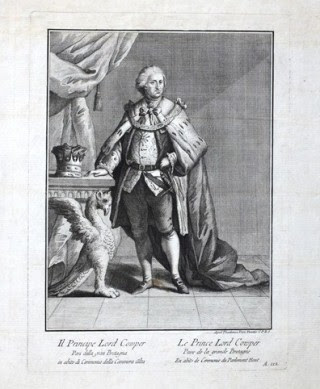
Wat bijzonder is aan deze gravure is dat er het koninklijke Brittania wapen onder staat uit die tijd. Ook is die meneer Nassau Cowper 3 een grootmeester van de Le Grand Tour geweest. Die was belangrijk voor de groei van de geillustreerde pers en de verspreiding van kennis over de wereld.
De graveur Anrea Mannuchi del Sarto komt uit een gerenommeerde Italiaanse kunstenaars familie waarvan er al vele katholieke kunst bekend was in de 15 e eeuw! Ook is er een verband tussen Nederland en Engeland op Koninklijk vlak. Nassau zegt het al, een spruit uit het Willemsgeslacht en dergelijke. De orangistenbeweging bestaat nu nog in delen van Ierland en Schotland.
Het is een opdracht van Nassau Cowper aan Andrea Mannucchi. Hij sponsorde ook een restauratie van een marmeren voorstelling van een Pieta, ik geloof in Milaan, waarschijnlijk als mecenas der kunsten in zijn Grand Tour spoor. De lijst is denk ik ca. 1800 dus ook rond de productie tijd 1780.
Eiken paneel ter afwerking, gerold glas met inundaties, handwerk, en een gefineerde lijst van eiken.

Het is een zeldzaam object gezien ik ook maar niet dan ook werkelijk niets kon vinden van de combi Nassau/Manuchi. De grootte zegt ook iets, folio formaat. Dat gaat niet zomaar in een alledaagse binding van een boekje destijds. Ik vermoed dat het dus uit die Orangisten hoek afkomstig is. M
The Grand Tour was the 17th- and 18th-century custom of a traditional trip through Europe undertaken by upper-class young European men of sufficient means and rank (typically accompanied by a chaperone, such as a family member) when they had come of age (about 21 years old).
The custom — which flourished from about 1660 until the advent of large-scale rail transport in the 1840s and was associated with a standard itinerary — served as an educational rite of passage. Though the Grand Tour was primarily associated with the British nobility and wealthy landed gentry, similar trips were made by wealthy young men of other Protestant Northern European nations, and, from the second half of the 18th century, by some South and North Americans.
By the mid-18th century, the Grand Tour had become a regular feature of aristocratic education in Central Europe as well, although it was restricted to the higher nobility. The tradition declined as enthusiasm for neo-classical culture waned, and with the advent of accessible rail and steamship travel—an era in which Thomas Cook made the "Cook's Tour" of early mass tourism a byword.
The New York Times in 2008 described the Grand Tour in this way:
Three hundred years ago, wealthy young Englishmen began taking a post-Oxbridge trek through France and Italy in search of art, culture and the roots of Western civilization. With nearly unlimited funds, aristocratic connections and months (or years) to roam, they commissioned paintings, perfected their language skills and mingled with the upper crust of the Continent.[1]

The primary value of the Grand Tour lay in its exposure to the cultural legacy of classical antiquity and the Renaissance, and to the aristocratic and fashionably polite society of the European continent. In addition, it provided the only opportunity to view specific works of art, and possibly the only chance to hear certain music.
A Grand Tour could last anywhere from several months to several years. It was commonly undertaken in the company of a Cicerone, a knowledgeable guide or tutor. The legacy of the Grand Tour lives on to the modern day and is still evident in works of travel and literature. From its aristocratic origins and the permutations of sentimental and romantic travel to the age of tourism and globalization, the Grand Tour still influences the destinations tourists choose and shapes the ideas of culture and sophistication that surround the act of travel.[2]
In essence, the Grand Tour was neither a scholarly pilgrimage nor a religious one,[3] though a pleasurable stay in Venice and a residence in Rome were essential. Catholic Grand Tourists followed the same routes as Protestant Whigs. Since the 17th century, a tour to such places was also considered essential for budding artists to understand proper painting and sculpture techniques, though the trappings of the Grand Tour—valets and coachmen, perhaps a cook, certainly a "bear-leader" or scholarly guide—were beyond their reach.
The advent of popular guides, such as the book An Account of Some of the Statues, Bas-Reliefs, Drawings, and Pictures in Italy published in 1722 by Jonathan Richardson and his son Jonathan Richardson the Younger, did much to popularise such trips, and following the artists themselves, the elite considered travel to such centres as necessary rites of passage. For gentlemen, some works of art were essential to demonstrate the breadth and polish they had received from their tour.

In Rome, antiquaries like Thomas Jenkins were also dealers and were able to sell and advise on the purchase of marbles; their price would rise if it were known that the Tourists were interested. Coins and medals, which formed more portable souvenirs and a respected gentleman's guide to ancient history were also popular. Pompeo Batoni made a career of painting the English milordi posed with graceful ease among Roman antiquities. Many continued on to Naples, where they also viewed Herculaneum and Pompeii, but few ventured far into Southern Italy, and fewer still to Greece, then still under Turkish rule.
Earl Cowper (pronounced "Cooper") was a title in the Peerage of Great
Britain. It was created in 1718 by George I for William Cowper, 1st
Baron Cowper, his first Lord Chancellor, with remainder in default of
male issue of his own to his younger brother, Spencer Cowper. Cowper
had already been created Baron Cowper of Wingham in the County of
Kent, in the Peerage of England on 14 December 1706, with normal
remainder to the heirs male of his body, and was made Viscount
Fordwich, in the County of Kent, at the same time as he was given the
earldom, also Peerage of Great Britain and with similar remainder. He
was the great-grandson of William Cowper, who was created a Baronet,
of Ratling Court in the County of Kent, in the Baronetage of England on
4 March 1642. The latter was succeeded by his grandson, the second
Baronet. He represented Hertford in Parliament. He was succeeded by
his eldest son, the aforementioned William Cowper, the third Baronet,
who was elevated to the peerage as Baron Cowper in 1706 and made
Earl Cowper in 1718. In 1706 Lord Cowper married as his second wife
Mary Clavering, daughter of John Clavering, of Chopwell, County
Durham.
William Cowper, 1st Earl Cowper.
Lord Cowper was succeeded by his son, the second Earl.

He assumed the additional surname of Clavering. Cowper married Lady Henrietta, younger daughter of Henry de Nassau d'Auverquerque, 1st Earl of Grantham, a relative of the Dutch House of Orange-Nassau, and a count of the Holy Roman Empire. On the death of Lady Cowper's elder sister, Lady Frances Elliot, in 1772, the second Earl's son, the third Earl became Lord Grantham's heir general, and on 31 January 1778 he was created a Prince of the Holy Roman Empire (Reichsfürst) by the Emperor Joseph II. [1] He was allowed by George III to bear this title in Great Britain.
In the history of the Dutch Republic, Orangism or prinsgezindheid
("pro-prince stance") was a political force opposing the Staatsgezinde
(pro-Republic) party. Orangists supported the princes of Orange as
Stadtholders (a position held by members of the House of Orange)
and military commanders of the Republic, as a check on the power of
the regenten. [1]:12 The Orangist party drew its adherents largely from
traditionalists – mostly farmers, soldiers, noblemen and orthodox
Catholic and Protestant preachers, though its support fluctuated
heavily over the course of the Republic's history and there were never
clear-cut socioeconomic divisions. [1]:13, wiki


EKP award recensie/ Kunstenaar Ritau van Koudewater Ritau's filosofische en poëtische benadering van het onderzoek naar de spirituele ...


