Saturday, January 29, 2022

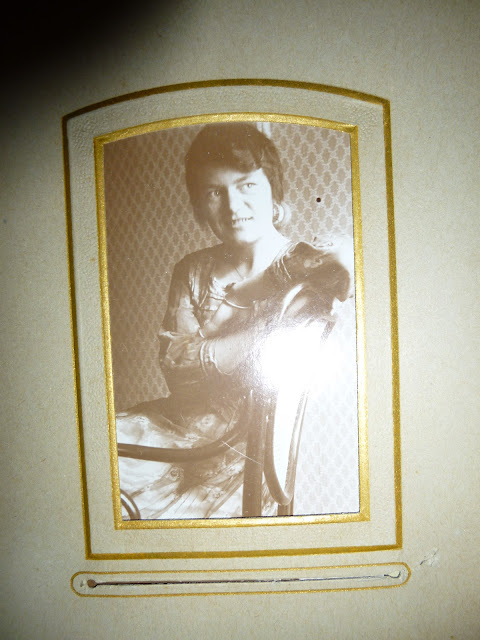
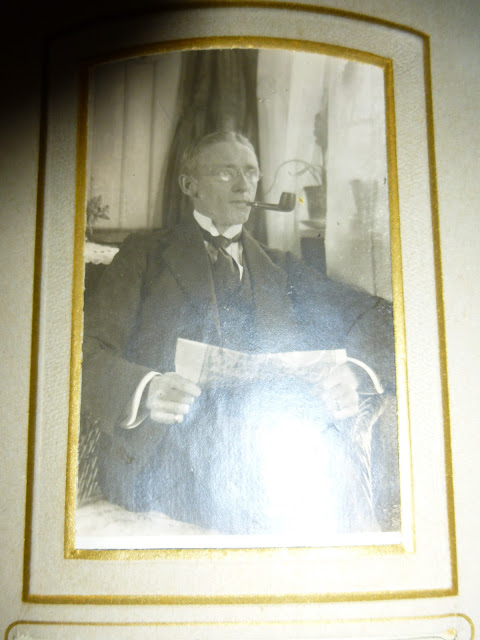
CDV album ca 1875 t0t 1912 Viggo Andersen fluitist die zelfmoord op zijn feest pleegde, vroege Fotografe Dorothea Nielsen uit Roskilde


Dorothea_Lange_atop_automobile_in_California_wiki


streetview Roskilde on Dorothea Nielsens'studio


Dorothea's family/

Source; /www.fotohistorie.com


Viggo Andersen the flutist


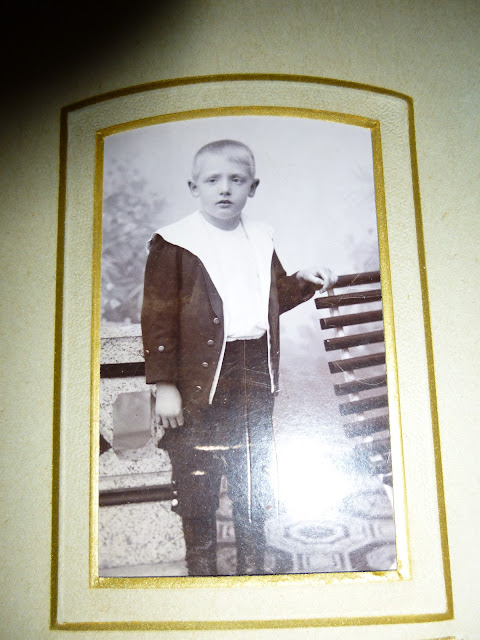
Albert Jeppson and family
Rosa Jeppson in Oriental dress

CDV album ca 1890 - 1912 Viggo Andersen flutist engraved on lock initials V.A. (father or son), early female professional photographer from Denmark Roskilde Dorothea Nielsen from her Roskilde studio. In those days professionals could paint portrays and shoot them.

The album is in decent conditon, velvet, silverplated engraved art nouveau lock and gold on the cartonboard edges. Viggo was a renown flutist, his father was a teacher in the art of the flute and music. He left his wife and children behind to later play for the big Theodore Thomas Orchestra from California.

Funny detail, he wrote a piece called Fantasy on the Royal Dutch anthem, I found the album in Holland. One day he invited all his friends at his party and then committed suicide in front of them.

Speculation runs in to the direction of remorse for having abandoned his family. In the album we find Cartes des Visites or CDV’s and Cabinet cards, these are the larger ones, all in mint condition with names of the portrayed persons written on them.

It is really special this album. Why?;


  1. Name of owner engraved and mentioned in album.

  2. Mint condition of all cards.

  3. Famous person committing suicide, an issue with which I have concerned my self for a long time, especially, why people commit suicide and suicide with artist and writers and suicide in Non-Western cultures (anthropology).

  4. Some connection with us Dutch, see Fantasy theme on the Royal Dutch anthem. (Wilhelmus van Nassauwe… M.v Sint Allegonde).

  5. Dorothea or Dorthea Nielsen, Maiden name Andersen (coincidences?) just like Viggo.

  6. Most cards are from this female Photographer based in Roskilde.

  7. All the cards are from one family and their relatives.

  8. Unique historical document especially for Denmark and her city of Roskilde.


One thing is also unique, there were almost no female photographers in those days the world was very conservative and the first steps for feminism, by sufragettes were just beginning to take place.

Another coincidens is the name, Dorothea, see Dorethea Lange;

- Dorothea Lange (born Dorothea Margaretta Nutzhorn; May 26, 1895 – October 11, 1965) was an American documentary photographer and photojournalist, best known for her Depression-era work for the Farm Security Administration (FSA). Lange's photographs influenced the development of documentary photography and humanized the consequences of the Great Depression.[1]

It was also not a job for physical weak people for one had to carry glass, metal, teakwood tripods and obscura boxes. All in all it was a lucky acquisition for my personal collection. M


Tuesday, August 10, 2021

Devotionalia; Reliek ovalen lijst met Gotisch gesneden letters van de 12 Apostelen

             Reliek lijst met Gotisch gesneden letters van de 12 Apostelen;


 Reliek lijst met Gotisch gesneden letters van de 12 Apostelen, na een bezoek aan
de heilige graven in vermoedelijk de St Pieter te Rome in 1888. Ik neem aan dat
het drukletters zijn die uit ouder blokdrukken genomen zijn ingelegd in de
memento lijst. Het werk is hersteld met koperen schroeven en gietijzeren
beugels. Het was aangetast door houtworm maar is bestreden. Ik vond een ets
uit een kapotte bijbel van 1866 /De voetwasching, aan de achterzijde heb ik de
ets van dezelfde bijbel / Het laatste Avondmaal gevoegd. Deze devotionalia is
eigenlijk Meertens waardig. Ik ben blij dat ik een doel ervoer heb gevonden door
het hier met u te delen! Als het blokdrukletters zijn spreken we waarschijnlijk
over wiegedrukkunst letters.


                                            Van Eyck, de 12 apostelen


                                            Catharina van Sienna 


                            De 12 namen van de 12 (13) Apostelen


                                    Devotionalia ovaal met reliekjes


        In de geest der apostelen, de voetwasching staalgravure uit Bijbel 1866.


            Drukblok klassieke bijbel kapitalen of aanvangsletters bij rubrieken.


Begrippenlijst;


Kapitalen; Kostbare letters, vaker hoofdletters.


Devotionalia;  Onder het begrip devotionalia verstaat men het geheel van (meestal kleine) religieuze gebruiksvoorwerpen zoals die in rooms-katholieke kring werden en worden gebruikt. Devotionalia zijn doorgaans geen religieuze kunst, maar worden gezien als uitingen van volksdevotie. Het zijn vaak massaprodukten die vooral volkenkundige waarde bezitten, hoewel er ook producten van religieuze volkskunst zijn die het niveau van massaproductie overstijgen. wiki


Meertens Instituut; Het Meertens Instituut onderzoekt en documenteert de Nederlandse taal en cultuur. Binnen het onderzoek worden verschillende onderzoeksgebieden onderscheiden: orale cultuur, religieuze cultuur, materiële cultuur, tradities en rituelen, syntactische variatie en fonologische variatie. Het wetenschappelijk onderzoek is tegenwoordig vooral contemporain georiënteerd: er wordt gezocht naar een verband met de hedendaagse samenleving en met actuele ontwikkelingen. Het Meertens Instituut heeft een uitgebreide collectie, bibliotheek, archieven en databanken, opgebouwd op het terrein van de Nederlandse etnologie en variatielinguïstiek. 


Wiegedruk; of Incunabel

Ook: wiegendruk. Gedrukt boek uit de begintijd van de boekdrukkunst, vervaardigd voor 1501.


Wednesday, May 5, 2021

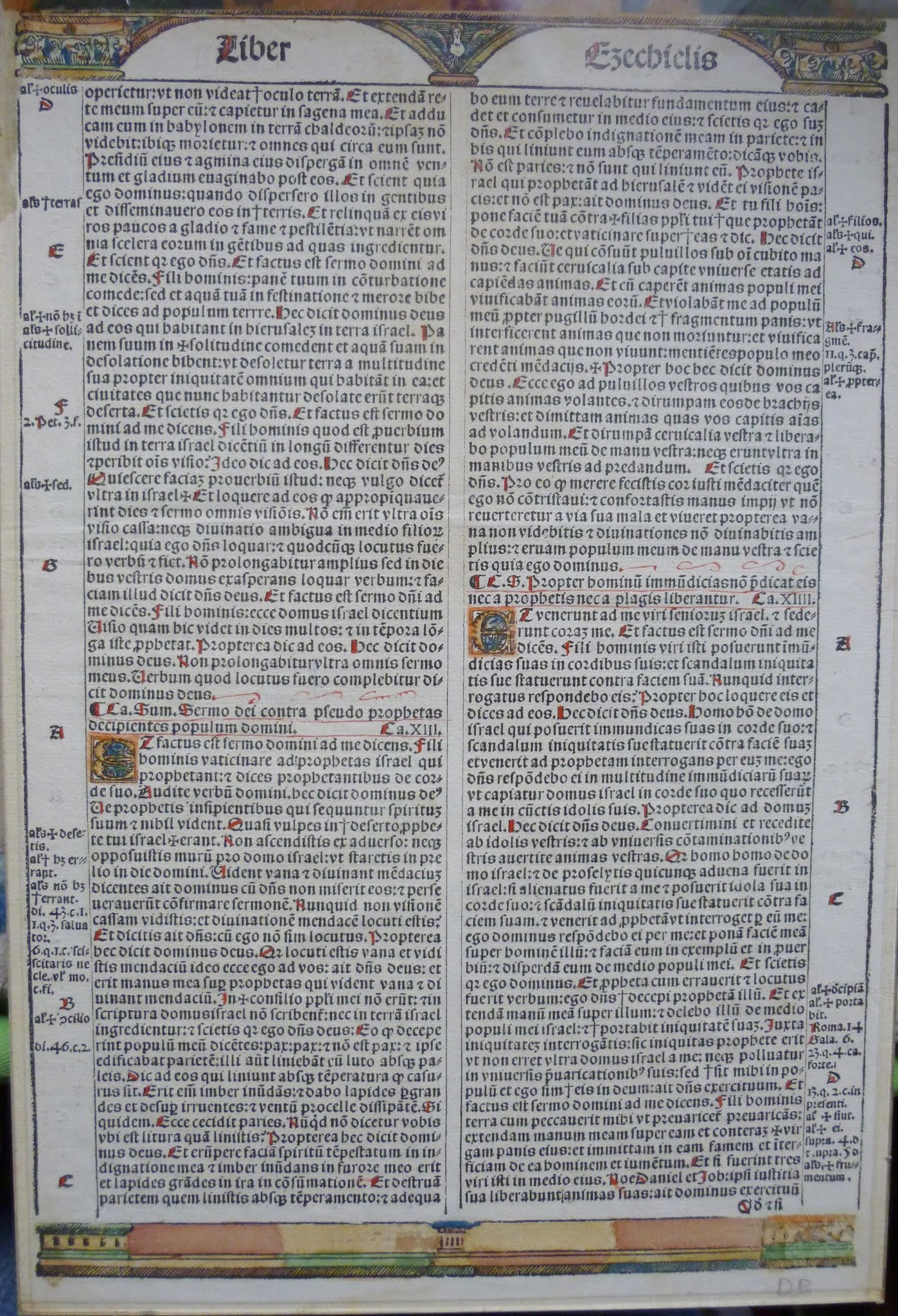
Gerubriceerde Folio van handgeschept papier en hand ingekleurd ca 1550 vroege bijbel/thora druk, folio 204


Cherub


Red lacquer

A cherub (/ˈtʃɛrəb/; [1] plural cherubim; Hebrew: ‫ְּרוּב‬ ‫כ‬ k ə rūv, pl.
‫ְּרוּבִים‬ ‫כ‬ k ə rūvîm) is one of the unearthly beings who directly attend to
God, according to Abrahamic religions. The numerous depictions of
cherubim assign to them many different roles, such as protecting the
entrance of the Garden of Eden. [2]
In Jewish angelic hierarchy, cherubim have the ninth (second-lowest)
rank in Maimonides' Mishneh Torah (12th century), and the third rank
in Kabbalistic works such as Berit Menuchah (14th century). De
Coelesti Hierarchia places them in the highest rank alongside
Seraphim and Thrones. [3]
In the Book of Ezekiel and (at least some) Christian icons, the cherub
is depicted as having two pairs of wings, and four faces: that of a lion
(representative of all wild animals), an ox (domestic animals), a
human (humanity), and an eagle (birds). [4][5] Their legs were straight,
the soles of their feet like the hooves of a bull, gleaming like polished
brass. Later tradition ascribes to them a variety of physical
appearances. [4] Some early midrashic literature conceives of them as
non-corporeal. In Western Christian tradition, cherubim have become
associated with the putto (derived from classical Cupid/Eros),
resulting in depictions of cherubim as small, plump, winged boys. [6]
A tetramorph cherub, in Eastern
Orthodox iconography
In Islam, the cherubim are the angels closest to God. Joseph von
Hammer-Purgstall noted Rūḥ as one of the most noble among the
cherubim. Others are the Bearers of the Throne or the archangels. [7]
In Ismailism, there are seven cherubim, comparable to the Seven
Archangels. [8] wiki


In Judaism, Christianity, and Islam, Ezekiel is acknowledged as a Hebrew prophet. In Judaism and Christianity, he is also viewed as the 6th-century BCE author of the Book of Ezekiel, which reveals prophecies regarding the destruction of Jerusalem, and the restoration to the land of Israel. 


Ezekiel statue on the stJohns-sint Janskathedraal 's-Hertogenbosch


Ezekiel, like Jeremiah, is said by Talmud[12] and Midrash[13] to have been a descendant of Joshua by his marriage with the proselyte and former prostitute Rahab. Some statements found in rabbinic literature posit that Ezekiel was the son of Jeremiah, who was (also) called "Buzi" because he was despised by the Jews.[14]

Ezekiel was said to be already active as a prophet while in the Land of Israel, and he retained this gift when he was exiled with Jehoiachin and the nobles of the country to Babylon.[15]

Rava states in the Babylonian Talmud that although Ezekiel describes the appearance of the throne of God (Merkabah), this is not because he had seen more than the prophet Isaiah, but rather because the latter was more accustomed to such visions; for the relation of the two prophets is that of a courtier to a peasant, the latter of whom would always describe a royal court more floridly than the former, to whom such things would be familiar.[16] Ezekiel, like all the other prophets, has beheld only a blurred reflection of the divine majesty, just as a poor mirror reflects objects only imperfectly.[17]

According to the midrash Canticles Rabbah, it was Ezekiel whom the three pious men, Hananiah, Mishael, and Azariah (also called Shadrach, Meshach, and Abednego in the Bible) asked for advice as to whether they should resist Nebuchadnezzar's command and choose death by fire rather than worship his idol. At first God revealed to the prophet that they could not hope for a miraculous rescue; whereupon the prophet was greatly grieved, since these three men constituted the "remnant of Judah". But after they had left the house of the prophet, fully determined to sacrifice their lives to God, Ezekiel received this revelation: "Thou dost believe indeed that I will abandon them. That shall not happen; but do thou let them carry out their intention according to their pious dictates, and tell them nothing".[18] wiki


Ezekiel is recognized as a prophet in Islamic tradition. Although not mentioned in the Qur'an by the name, Muslim scholars, both classical[b] and modern[c] have included Ezekiel in lists of the prophets of Islam.

The Qur'an mentions a prophet called Zul-Kifl. This prophet is sometimes identified with Ezekiel although Zul-Kifl's identity is disputed. Carsten Niebuhr, in his Reisebeschreibung nach Arabian,[23] says he visited Al Kifl in Iraq, midway between Najaf and Hilla and said Kifl was the Arabic form of Ezekiel. He further explained in his book that Ezekiel's Tomb was present in Al Kifl and that the Jews came to it on pilgrimage. The name Zul-Kifl or more correctly Dhū l-Kifl (ذو الكفل) would mean "Possessor of the Double" or "Possesor of the Fold" (ذو dhū "possessor of, owner of" and الكفل al-kifl "double, folded"). Some Islamic scholars have likened Ezekiel's mission to the description of Dhul-Kifl. When the exile, monarchy, and state were annihilated, a political and national life was no longer possible. In the absence of a worldly foundation it became necessary to build a spiritual one and Ezekiel performed this mission by observing the signs of the time and deducing his doctrines from them. In conformity with the two parts of his book, his personality and his preaching are alike twofold. Aside from the possible identification of Zul-Kifl with Ezekiel, Muslims have viewed Ezekiel as a prophet, regardless of his identification with Zul-Kifl.

Ezekiel appears in all Muslim collections of Stories of the Prophets.[24] Muslim exegesis further lists Ezekiel's father as Buzi (Budhi) and Ezekiel is given the title ibn al-‘ajūz, denoting "son of the old (man)", as his parents are supposed to have been very old when he was born. A tradition, which resembles that of Hannah and Samuel in the Hebrew Bible, states that Ezekiel's mother prayed to God in old age for the birth of an offspring and was given Ezekiel as a gift from God.[25] wiki

Ontmoetingen/ Kunstenaar Ritau van Koudewater

  EKP award recensie/ Kunstenaar Ritau van Koudewater Ritau's filosofische en poëtische benadering van het onderzoek naar de spirituele ...